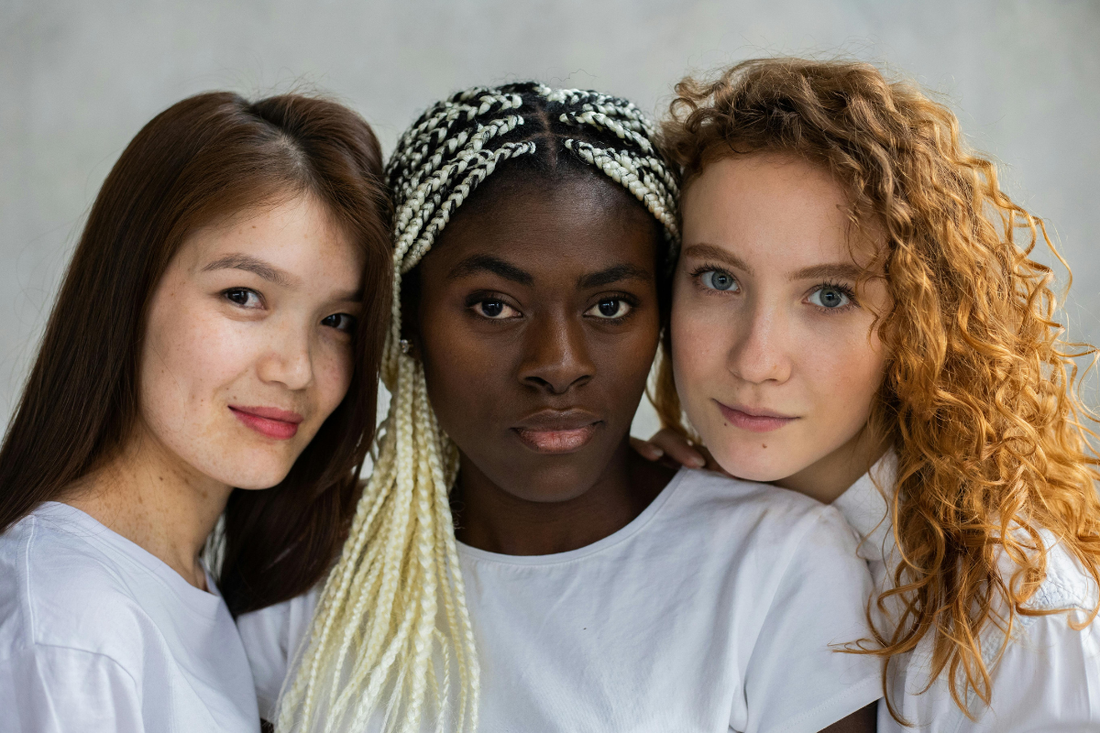
No matter what type of hair you have, a satin bonnet benefits every hair type: curly, coily, wavy, straight, and fine. They reduce overnight friction, retain moisture, cut down on morning frizz and tangles, and keep styles lasting longer. The hair science behind them applies universally.
This guide covers what a satin bonnet actually does, why it works for every hair type, and how to find the right one for your hair.
What does a satin bonnet do?
A satin bonnet sits between your hair and your pillowcase while you sleep. That barrier makes a bigger difference than most people realise.
Most pillowcases are cotton. Cotton is an absorbent fabric that creates friction as you move during the night. That friction roughs up the outer layer of each hair strand, which leads to frizz, tangling, and over time, breakage.
Cotton also draws moisture out of your hair throughout the night, meaning you often wake up with drier hair than you went to bed with.
Satin works completely differently. Its smooth surface lets hair glide rather than snag. Less friction, less moisture stripped away, and your hair wakes up much closer to how it went to bed.
The benefits are consistent across every hair type:
- Reduced frizz caused by overnight friction against your pillowcase
- Better moisture retention because satin does not absorb like cotton does
- Less breakage from hair snagging on fabric as you move in your sleep
- Longer lasting styles including braids, locs, blowouts, and wash and gos
- Fewer morning tangles regardless of hair texture
- Natural oils stay where they belong rather than being transferred to your pillow and potentially your skin overnight

Why It Works for Every Hair Type
There is a common assumption that satin bonnets are only for curly or natural hair. That assumption is worth challenging, because the mechanism behind them has nothing to do with curl pattern. Friction damages hair. Moisture loss dries hair out. Both happen on a cotton pillowcase regardless of whether your hair is coily, straight, wavy, or anywhere in between.
Where results vary is in how noticeably you feel the difference. Curly and coily hair is naturally drier and more vulnerable to overnight friction, so the improvement is often dramatic and immediate. For wavy or straight hair the difference is more subtle, but it is still there: less frizz, fewer tangles, better condition over time.
The question is simply whether overnight friction and moisture loss are affecting your hair. For almost everyone, the answer is yes.
Curly and Coily Hair

For curly, coily, and natural hair, sleeping in a satin bonnet is one of the most impactful overnight habits you can build. Tight curl patterns and coils are more vulnerable to moisture loss because natural oils from the scalp struggle to travel down a tightly wound strand. That means retaining moisture overnight is an ongoing priority, and reducing anything that strips it away matters significantly.
A bonnet also preserves the curl pattern while you sleep. Friction against a cotton pillowcase disrupts curls, creates frizz, and compresses the shape of your style. With a bonnet, you wake up with more definition, more moisture, and far less to deal with in the morning.
For 4C hair especially, where breakage and moisture retention are daily considerations, wearing a bonnet every night is one of the simplest high-return habits in any hair routine.
Read more: Best Satin Bonnets for Curly Hair and Best Satin Bonnet for 4C Hair
Braids, Locs, and Protective Styles

If you wear protective styles, overnight protection is not optional. Friction against a cotton pillowcase causes frizz along the length of braids and locs, which makes styles look older far faster than they should. Cotton also pulls moisture and product from the hair overnight, drying out the style and the scalp underneath.
Protecting your style overnight with a silk or satin bonnet extends its life significantly, which means less manipulation and less stress on your hair over time. It is one of the most practical things you can do to get the most out of a protective style.
One thing to get right here is size. A standard bonnet will not fit comfortably over a full head of box braids, large twists, or mature locs. You need a large or oversized bonnet so your style sits inside without being compressed or bent.
Shop Satin Bonnets for natural hairWavy and Straight Hair

Wavy hair benefits more than most people expect. Waves are disrupted by the same overnight friction that affects curls, and many people with wavy hair find their pattern is less defined in the morning purely because of how they slept. A satin bonnet keeps the wave shape intact and significantly reduces frizz that can flatten or blur waves overnight. For anyone following a wavy hair or curly girl method routine, a bonnet is a natural part of the process.
For straight hair, the benefit is more subtle but still real. Straight hair tangles during sleep, and satin reduces that considerably. If you blow-dry or heat-style your hair regularly, a bonnet will extend how long your blowout lasts between washes.
If your hair is healthy and untreated and does not tangle or frizz overnight, a satin pillowcase can be a lower-effort alternative that achieves much the same result.
Read more: Can you wear a satin bonnet with Straight Hair
What to Look for in a Satin Bonnet
1. Size
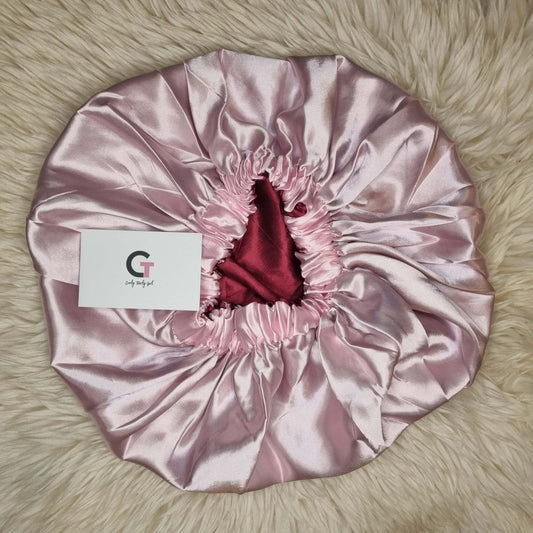
This is the most overlooked factor. If you have thick, long, or voluminous hair, or wear any kind of protective style, you need a large or oversized bonnet. A bonnet that is too small compresses the hair and reduces the benefit. Our satin bonnets are designed with an oversized fit to accommodate big hair, protective styles, and everything in between.
2. Double-layer construction
A double-layered bonnet holds its shape better, lasts longer through regular washing, and is less likely to tear at the elastic. Single-layer satin is thinner and tends not to hold up as well over time.
3. Elastic band
The elastic should be firm enough to stay in place overnight without causing tension at the hairline. If it is uncomfortable, you will not wear it consistently.
4. Reversible design
A reversible bonnet gives you two colour options in one and usually indicates better overall construction, since both sides need to be properly finished.
5. Vegan and cruelty-free
If this matters to you, look for a brand that confirms it. All Curly Twirly Girl bonnets are 100% vegan, and come in eco-friendly recyclable packaging.
The Bottom Line
No matter what type of hair you have or where you come from, your hair is dealing with the same things every night: friction from your pillowcase and moisture being drawn out while you sleep. A satin bonnet addresses both of those things simply and effectively.
The results are most dramatic for curly and coily hair, but the logic holds for every texture. Less friction and better moisture retention overnight adds up to healthier, better-looking hair over time.
Everyone's hair deserves that. Browse our full range of large satin bonnets. Vegan, double-layered, reversible, and designed to fit every hair type properly.
FAQs
Can anyone wear satin bonnets?
Are satin bonnets good for all hair types?
Yes. Curly and coily hair sees the most noticeable results, but wavy, straight, and fine hair all benefit from reduced friction, better moisture retention, fewer tangles, and longer-lasting styles. The hair science applies universally.
Who should wear a satin bonnet?
Anyone who wants to protect their hair overnight. Satin bonnets benefit every hair type and every background. They are especially useful for anyone wearing protective styles, anyone with dry or fragile hair, and anyone who wants to extend the life of a blowout or wash and go.
What does a satin bonnet do for your hair?
It creates a smooth barrier between your hair and your cotton pillowcase. Cotton generates friction and absorbs moisture as you sleep, which causes frizz, tangles, and breakage over time. Satin allows hair to glide without snagging, keeping moisture in and your style intact through the night.
Can you wear a satin bonnet on wet hair?
It is best to let your hair dry before putting on a bonnet. Wet hair is more fragile and prone to breakage, and sleeping with damp hair sealed inside a bonnet is not ideal for the scalp. For a wash and go, let your hair dry to around 80 percent before covering it.
What size satin bonnet do I need?
If you have thick, long, or voluminous hair, or wear protective styles like braids, twists, or locs, you need a large or oversized bonnet. A standard-sized bonnet will compress your hair, which defeats the purpose. Our large satin bonnets are designed to fit big hair and protective styles comfortably.
Is satin or silk better for hair?
Both reduce friction and retain moisture better than cotton. Silk is a natural fibre and slightly softer, but it costs significantly more and requires more careful washing. Satin delivers comparable hair benefits at a much more accessible price point. Read our full silk vs satin bonnet guide for more.
Related reading:
Best Black-Owned Bonnet Brands
Silk vs Satin Bonnet Guide
How to Sleep with Curly Hair
Benefits of a Satin Bonnet
Bonnets for 4C Curls