

What's Your Curl Type? A Guide
Your curl type is classified using a number from 2 to 4 and a letter from A to C. The number describes your curl shape (2 is wavy, 3 is curly, 4 is coily), and the letter describes the width of your curls, from widest (A) to most tightly coiled (C). Use the visual guide and quick-reference table below to find your type.
Quick Reference: All Curl Types

If you would rather compare your curls visually, here is a quick overview of every type from 2A to 4C.
| Type | Curl Shape | Curl Width | Key Trait |
|---|---|---|---|
| 2A | Loose, tousled waves | Wide, undefined | Thin, silky, little root volume |
| 2B | Defined S shaped waves | Medium | Flat roots, prone to frizz |
| 2C | Defined waves to loose curls | Coarser, thicker | Curl from the roots, frizz-prone |
| 3A | Loose S shaped curls | Sidewalk chalk width | Most shine of the curly types |
| 3B | Springy spirals | Permanent marker width | Voluminous root to end |
| 3C | Tight corkscrews | Pen or pencil width | Densely packed, voluminous |
| 4A | Tightly coiled S or Z shape | Crochet needle width | Fine, wiry strands |
| 4B | Z shaped, angular | Pen spring width | Densely packed, less defined |
| 4C | Tightest coils, least definition | Varies, soft to wiry | Most fragile, needs most moisture |
How to Tell Your Curl Type
Knowing your curl type helps you choose the right tools, such as wide tooth combs, detangling brushes, and scalp massagers, as well as accessories like a satin bonnet, and the right products to manage your curls.
- Examine your hair both when it is wet and after it air dries without product. Wet hair often shows the true shape of the curl, especially for tighter coils, while dry hair shows how much shrinkage or frizz you experience.
- Look at the overall shape of your curls (the number) and how tightly wound or wide they are (the letter).
- Remember that many people have more than one curl type across their head, often looser at the crown and tighter underneath. This is completely normal, and your routine should be based on your most prevalent or most challenging pattern.
There are no "good" or "bad" curl types. Every pattern is beautiful, and understanding yours simply helps you keep it healthy. Once you know your type, the Curly Girl Method is a good next step for building a routine that protects your natural texture.
How Curls Form
Hair has three main layers: the cuticle, the cortex, and the medulla.
The cuticle is the outermost layer, hardened by keratin, the most abundant protein in hair. It protects the inside of the strand. Over time the cuticle can break down and become damaged, making it harder for hair to retain moisture and shine.
The cortex is the middle layer and contains melanin, which gives hair its colour. This is also where your curl pattern is formed, through bonds between keratin and sulfur atoms that bend the strand into shape. Curly hair has more of these bonds than straight hair, which results in more curl. If the cuticle is unhealthy, these bonds weaken and curls can lose definition or become frizzy.
The medulla is the innermost layer and supports the structure of the hair. Fine hair often lacks a medulla, which is part of why it lies flatter and feels silkier. Coarser hair tends to hold its shape because of this core layer.
Type 2: Wavy
To state the obvious, wavy hair is right between straight and curly hair. It is flatter at the roots and tends to be finer in texture, much like straight hair. The pattern of Type 2 hair ranges from undefined loose curls to defined “S” shaped curls. It doesn’t tend to be particularly oily or dry.
-

2A
The hair strands tend to be thin and silkier in texture. The waves have a tousled appearance, and lack any distinct definition. There is little volume at the roots. It is relatively easy to style but can be weighed down by products.
-

2B
The strands of hair are a medium texture. The hair is almost completely flat at the roots, but there are well-defined “S” shaped curls below the ear. This hair type is more resistant to styling than 2A and more prone to frizz.
-

2C
The hair has a thicker, coarser texture. There is curl definition starting at the roots, and there may be ringlets throughout the hair. This type is much more prone to frizz and is also styling-resistant
Type 3: Curly
Curly hair has a very defined “S” shaped pattern. It is voluminous and the curls have more bounce to them than in wavy or coily hair. The cuticle of this hair type does not lay flat, therefore it can be prone to damage and does not typically shine. Because of this, all Type 3s should use protective products and styling to prevent frizz and further damage.
-

3A
This is the most shiny of the curly hair types. The curls are wide, loose “S” shaped curls. The width of the curls is often compared to the size of sidewalk chalk.
-

3B
This hair type has bouncy spirals and corkscrews. It is voluminous from root to end. The width of the curls is about the size of a permanent marker.
-
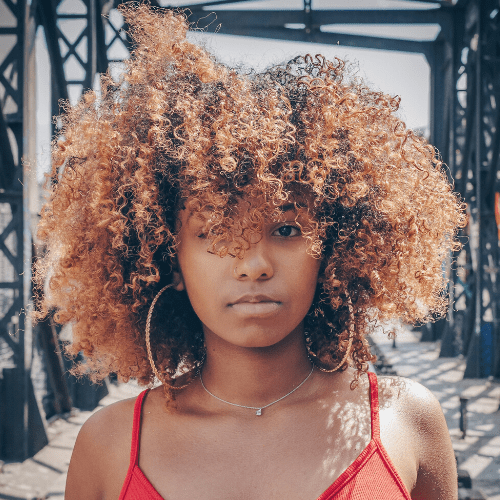
3C
Springy corkscrew curls and ringlets that are extremely voluminous and densely packed. The width of the curls is comparable to the size of a ballpoint pen or pencil.
Type 4: Coily
Coily, or kinky, hair is the most fragile of all hair types. It has fewer cuticle layers to protect the health of the strands, and requires the most protective measures. It is dense, voluminous, and can be styled, but should be treated with care. The main issues are tangling, moisture loss, and shrinkage.
-
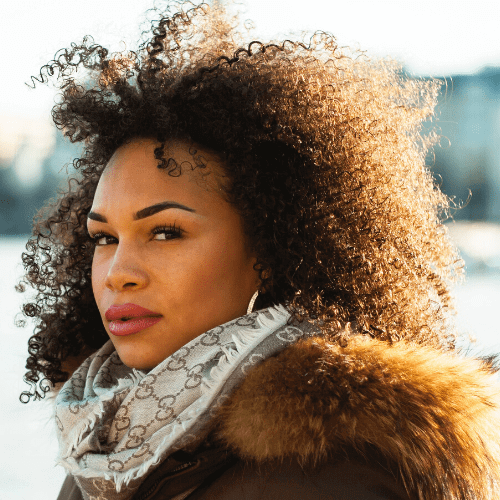
4A
This type has fine, wiry hair strands. There is an abundance of tightly coiled curls that form an “S” or “3” shape when stretched. The width of the curls is around the same size as a crochet needle.
-
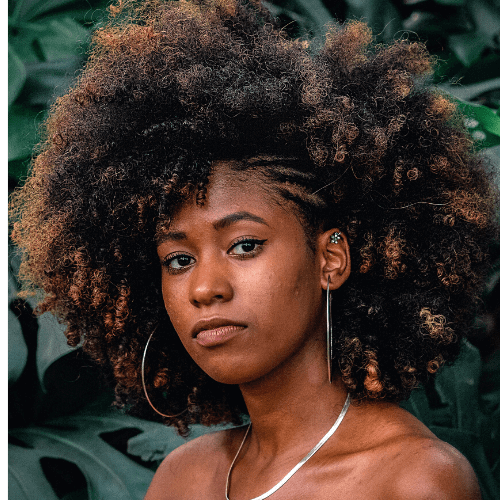
4B
The curls of this type are less defined and are very angular. The head is densely packed with “Z” shaped curls, rather than “S” shaped. The width of the curls is akin to the spring of a ballpoint pen.
-
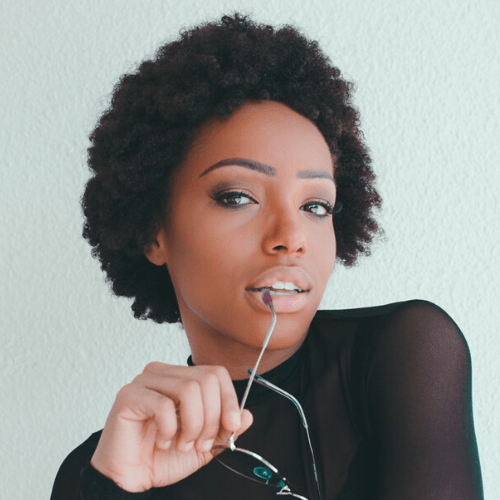
4C
This type has the least definition of all curl types. The texture of the hair can range from very soft to coarse and wiry. Just like 4B, there are bountiful coils in 4C hair. This is the most fragile of all hair types, and should be treated delicately.
What's your hair type?
Knowing your hair type will help you to better understand your hair and what it needs to maintain its health. This will help you to decide the best tools (wide tooth combs, detangling shower combs, afro hair combs, scalp massagers). As well as the best accessories like a satin hair bonnet products (shampoos and conditioners) to manage your curls.
Some sources recommend examining your hair while it is still wet, while others suggest that you let your hair air dry without product. You may be best off doing both. When wet, it may be easier to see the exact shape of the curls, especially with more tightly wound coils. As the hair dries, you will be able to tell how much shrinkage or frizz you experience. Examine the shape your curls take, and how compact the curl pattern is in each strand.
It’s important to know that you may have multiple types of curls in your hair. This is perfectly normal.
We hope the above guide has given you a better understanding of how to determine your curl type so that you can treat and manage your curls.
Shop curl-friendly products at the curly store
-
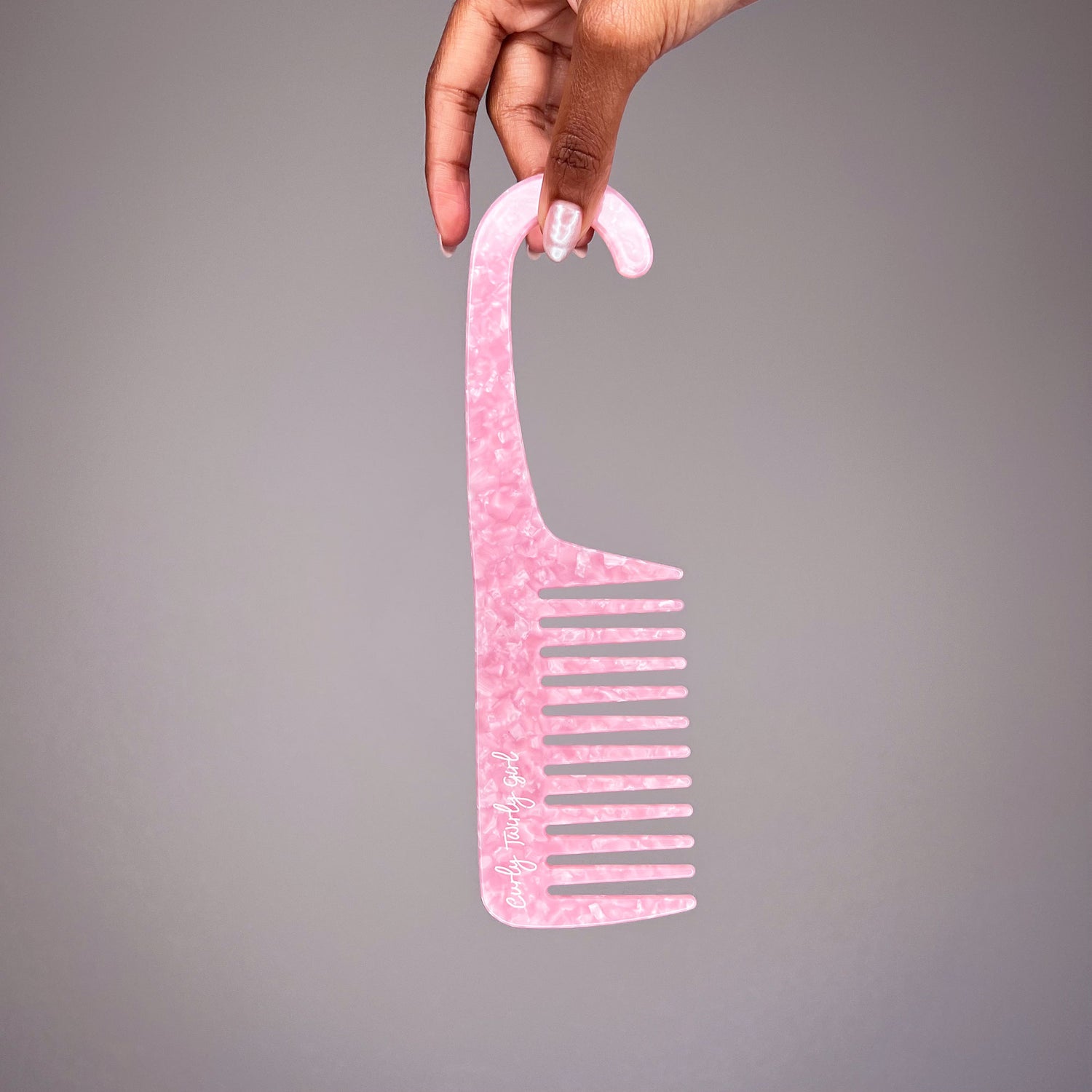
Combs for Curly Hair
Detangle or add volume to your hair with our eco-friendly wide tooth...
-
Satin Bonnets
Our large satin bonnets are made for curly, coily, 4C, natural hair,...
-
Detangling Brushes for Curly Hair
Are you in need of a great detangling brush for curly hair?...
